
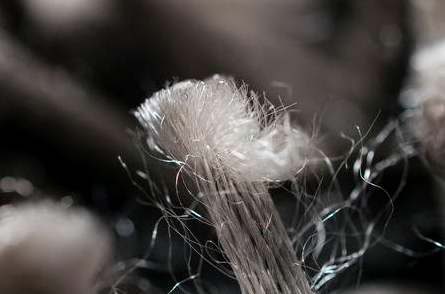
Today we're covering the last of the fabric types: synthetic fibers.
Synthetic fibers emerged through the textile industry and chemical research, and originated through the transformation of petroleum.
They were created out of a desire to imitate nature by creating fibers with the advantages of natural fibers but without their drawbacks. We can distinguish between different variations:

POLYESTER: It is considered the most popular man-made fabric, since it is the most widely produced and used synthetic fiber in the world. It originated in 1941 and is obtained from petroleum derivatives. It doesn't shrink, dries quickly, and is resistant to UVA rays. Its drawbacks? Besides its origin, it doesn't absorb water well but does absorb oil, so stains aren't easy to remove. It also tends to create static electricity.
POLYAMIDE: It is best known as Nylon. It is a strong, lightweight fiber. Very absorbent and durable, and like polyester, it wrinkles very little and produces static electricity. It has a soft feel and is hypoallergenic (it doesn't cause any type of allergy). Another point in its favor? It is easily recycled.

ACRYLIC: This type of fiber is usually used on its own or blended with other fibers such as wool, cotton, and so on. It is a very good choice as a substitute for wool, since it does not come from an animal source. This fabric was created to imitate the characteristics of wool. It feels soft, silky, lightweight, and warm. It dries very quickly and doesn't wrinkle, so it doesn't require ironing. Its only little “flaws” are that it tends to pill, can produce static electricity, and shrinks with heat.
ELASTANE: Elastane is an elastomer fiber created as a substitute for latex. You probably know this fabric as “Lycra,” although it can also be found under the name “Spandex.”
It is less allergenic than latex, but it doesn't tolerate high temperatures well.
This fiber is always blended with other fibers and used in small quantities, since its purpose is to add stretch to the fabric, providing greater resistance to wear, tearing, and so on.
At first it was used for sportswear, but today we can find it in most garments. If you look at the fiber content of your jeans, you'll surely see that they contain elastane or spandex in a small percentage (2% or 3%).
Remember that you have Part I, II, and III of Types of Fabrics, and that we've created a PDF so you can download, save, or print them.
See you in the next chapter of Types of Fabrics!