

As on other occasions, today’s post is especially for the girls (and boys, who are fewer, but we know you’re out there) who are just starting to sew. Today we’ll look at what a basic sewing kit should contain: the 10 essentials you can’t do without and will miss if you don’t have them. There’s also a lot of personal preference involved in what you decide to put in your sewing kit and what you prefer to leave out, but some things are beyond preference (unless you’ve learned to sew without a needle and thread).
This post will be useful whether you sew by hand or use a machine. It’s true that if you’re a machine sewer, like us, you’ll need some special tools, but we’ll take care of those in other posts.
This one is about the basic sewing kit. Shall we rummage around in ours and see what we find?
The 10 things your basic sewing kit should contain
1. Needles
Obviously, right? Even if you sew almost exclusively by machine, you’ll need to keep needles on hand for small repairs or special projects, such as the invisible stitch. If you’re one of those people who wrestle with the needle for ages before managing to thread it, it’s also useful to keep a needle threader nearby. Just as there are different types of sewing machine needles, there are different sizes and thicknesses of regular needles depending on the fabric and thread you work with. Keep a little variety on hand.
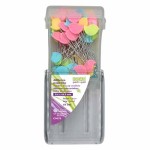 2. Pins (and a pincushion)
Trying to sew without pins would be a disaster. You need them in your basic sewing kit to hold the fabric in place so it doesn’t move while you sew: joining pattern pieces, sewing a hem, attaching a waistband… Everything! The bird-shaped ones we use are equally pretty and practical, always easy to see. And obviously, you can’t have them scattered everywhere: you need somewhere to keep them close at hand and ready to use. In other words, a pincushion. You can find them in many shapes and sizes, made of fabric, foam, magnetic materials… Or you can even customize your own pincushion.
An alternative to pins, along with basting, is water-soluble glue sticks, which are sold in pencil form. This glue disappears with water and leaves no residue.
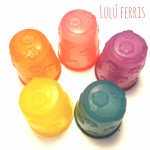 3. Thimble
It may take you a while to get used to wearing one, and you may feel a little uncomfortable at first, but you need it. You won’t want to keep pricking your fingers. It should be comfortable and fit your finger well, so it neither pinches nor keeps falling off. Those made from flexible materials, such as silicone thimbles, are more comfortable than rigid ones, and if you have sensitive nails, they won’t give you that icky feeling that metal ones can.
 4. Measuring tape and ruler
As you’d expect, measuring tools are also a very important part of a basic sewing kit. Measuring tape is essential for taking measurements (of your own body or a model’s), and the ruler will help you measure and mark the fabric. You could measure fabric with measuring tape, yes, but you need a ruler to easily draw the cutting and sewing marks on the fabric with a marker.
 5. Scissors
You probably already knew that scissors are essential, but you may not know that you need to have a pair of scissors exclusively for cutting fabric. You shouldn’t cut thread or other materials (batting, felt, interfacing, paper…) with them, because they’ll become dull and eventually stop cutting well. Besides all kinds of “ordinary” sewing scissors, you can also find left-handed scissors and pinking shears, which keep the fabric from fraying when cut.
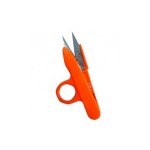 6. Thread snips
Precisely because of what we just told you, thread snips are another excellent tool to keep in your basic sewing kit. They’re a special type of scissors whose sole purpose is to cut thread when you’ve finished a seam, but they’re useful because they keep you from giving in to the temptation to use your fabric scissors for everything.
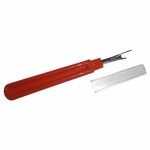 7. Seam ripper / buttonhole opener
As its name suggests, this is the tool we can use to undo stitches we’ve sewn by mistake, thanks to the long, sharp point at its end. It can also be used to make the initial incision that lets us work buttonholes into the fabric. Some people also use it to cut thread, although it’s less “delicate” than thread snips.
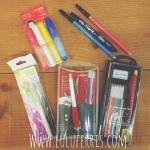 8. Markers
This very week we published a post discussing the different types of markers you can find in our store and the particular features of each one. It’s essential to have some kind of marker in your basic sewing kit, especially for drawing cutting lines on the fabric, marking where a particular seam goes, showing how far a stitch should reach, and so on.
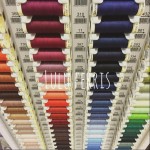 9. Thread (+ basting thread)
This one is obvious too, right? We won’t do much sewing if we don’t have thread… Although there are many types, the most common are cotton and polyester. Polyester thread is usually used for machine sewing because it’s stronger. Basting thread is made from 100% cotton and is very easy to break, so you can remove it once you’ve sewn over it. All-purpose threads are those everyday threads that work for almost any kind of task.
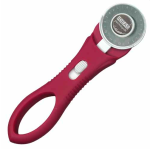 10. Rotary cutter and cutting mat
This last pair may not be strictly essential, but once you have them at home, you’ll understand why we included them among the basics. They’ll make your life much easier when cutting relatively small pieces of fabric. We count them as one item because to use the rotary cutter, you’ll need a cutting mat. Besides being super practical for cutting fabric without going crooked, you need it to protect the table. Perfect cuts in the blink of an eye.
Extras:
If you’re just starting, this is everything you need, but you can always add a few extras. Safety pins, for example, always end up being useful for something. You can also include some buttons and a couple of zippers just in case, a few snaps, or a little Velcro.
And of course, the sewing kit itself! Take a look at our organizer boxes, although you already know that cookie tins never go out of style.
We hope this post has been useful to you and, if you think it could be useful to more people, be generous! Share it on social media :)